

Vascular Surgery
Advanced Care for Circulation and Vascular Health
Vascular surgery focuses on diagnosing and treating conditions that affect the arteries and veins throughout the body. These conditions can limit blood flow, cause pain, delay wound healing, and increase the risk of serious complications such as stroke or limb loss.
At Midland Surgical Associates, our board-certified surgeons provide both minimally invasive and open vascular procedures, tailored to each patient’s condition and overall health. We also offer comprehensive vascular evaluations and diagnostic testing to determine whether surgical or non-surgical treatment is the best approach for you.
Our goal is to restore healthy circulation, relieve symptoms, and protect your long-term vascular health.

Conditions We Treat
Peripheral Arterial Disease (PAD)
PAD occurs when plaque buildup narrows or blocks arteries, most commonly in the legs. Reduced blood flow can lead to pain, mobility issues, and wounds that fail to heal.
Claudication
Claudication is muscle pain, cramping, or fatigue that occurs during activity—such as walking—and improves with rest.
It is often the earliest and most common symptom of peripheral arterial disease (PAD).
Patients may notice:
-
Leg pain after walking a short distance
-
Tightness or fatigue in the calves, thighs, or buttocks
-
Gradual worsening of walking tolerance
Early diagnosis allows for treatment options that may prevent disease progression.
Rest Pain
Rest pain is persistent pain in the feet or legs that occurs even when you are not walking, often worsening when the legs are elevated and improving when sitting upright.
This symptom indicates advanced or end-stage PAD and requires prompt evaluation by a vascular specialist to prevent serious complications.
Carotid Artery Disease, Stroke, and TIA
Stroke
A stroke is a permanent neurological injury caused by interrupted blood flow to the brain. Symptoms may include:
-
Sudden weakness or numbness on one side of the body
-
Difficulty speaking or understanding speech
-
Vision loss
-
Loss of balance or coordination
-
Severe headache or dizziness
While recovery is possible, stroke prevention is critical.
Transient Ischemic Attack (TIA)
A TIA, sometimes called a “mini-stroke,” causes stroke-like symptoms that resolve within minutes or hours.
TIAs are a serious warning sign and indicate a high risk of a future stroke without intervention.
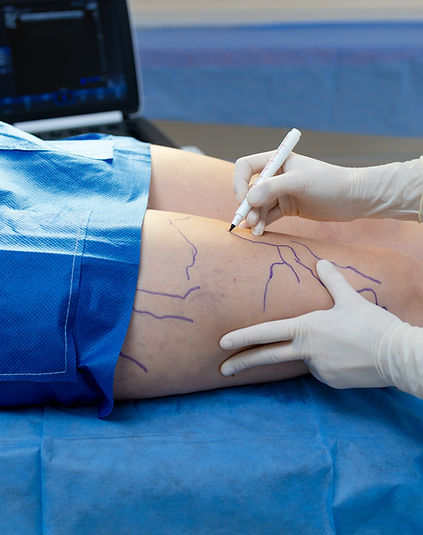
Varicose Veins
Varicose veins are enlarged, twisted veins that develop close to the skin’s surface. While often considered cosmetic, they can cause:
-
Aching or heaviness in the legs
-
Swelling
-
Skin discoloration
-
Ulcers or skin breakdown
Closing or removing varicose veins does not harm circulation, as blood is naturally rerouted to healthy veins.

Minimally Invasive Vein Treatments
Many vein conditions can be treated without traditional surgery, including:
-
Sclerotherapy – Injection of a solution to close diseased veins
-
Catheter-assisted ablation – Heat-based treatment to seal veins from within
-
Ambulatory phlebectomy – Removal of veins through tiny skin punctures
-
Endoscopic vein surgery – Small incisions with camera-guided closure
These techniques typically involve less discomfort, faster recovery, and minimal scarring.
Open Vascular Surgery
When minimally invasive options are not appropriate, open surgery may be required to restore blood flow or repair damaged vessels.
AV (Arteriovenous) Fistula
An AV fistula is created to provide reliable access for hemodialysis by connecting an artery directly to a vein.
This procedure increases blood flow and strengthens the vein for repeated dialysis use.
In some cases, a synthetic graft may be used if native vessels are not suitable.
Bypass Surgery
Bypass surgery reroutes blood around a blocked artery using:
-
A patient’s own vein, or
-
A synthetic graft
-
The procedure is named based on the arteries involved, such as a femoral-to-popliteal (fem-pop) bypass.
Bypass surgery is often recommended for severe blockages that cannot be treated with less invasive techniques.
Endarterectomy
An endarterectomy involves surgically removing plaque from inside an artery to restore normal blood flow.
-
Most commonly performed on the carotid arteries to reduce stroke risk
-
Can also be used in other narrowed arteries
-
Performed under general or local anesthesia
-
Hospital stay ranges from same-day discharge to several days, depending on complexity